
Move over white shaker kitchen. The natural beauty of real wood has really shaken up kitchen design.
From coast to coast, today’s trending looks in kitchen design are rooted in the shift away from the all white kitchen to a calming and grounded biophilic palette of greens, browns, and soft blue earth tones. Naturally, wood is back and more beautiful than ever – especially when paired with pops of color. Light wood tones, warm neutrals, and mix and match finishes and materials lead in popularity for homeowners and designers alike.
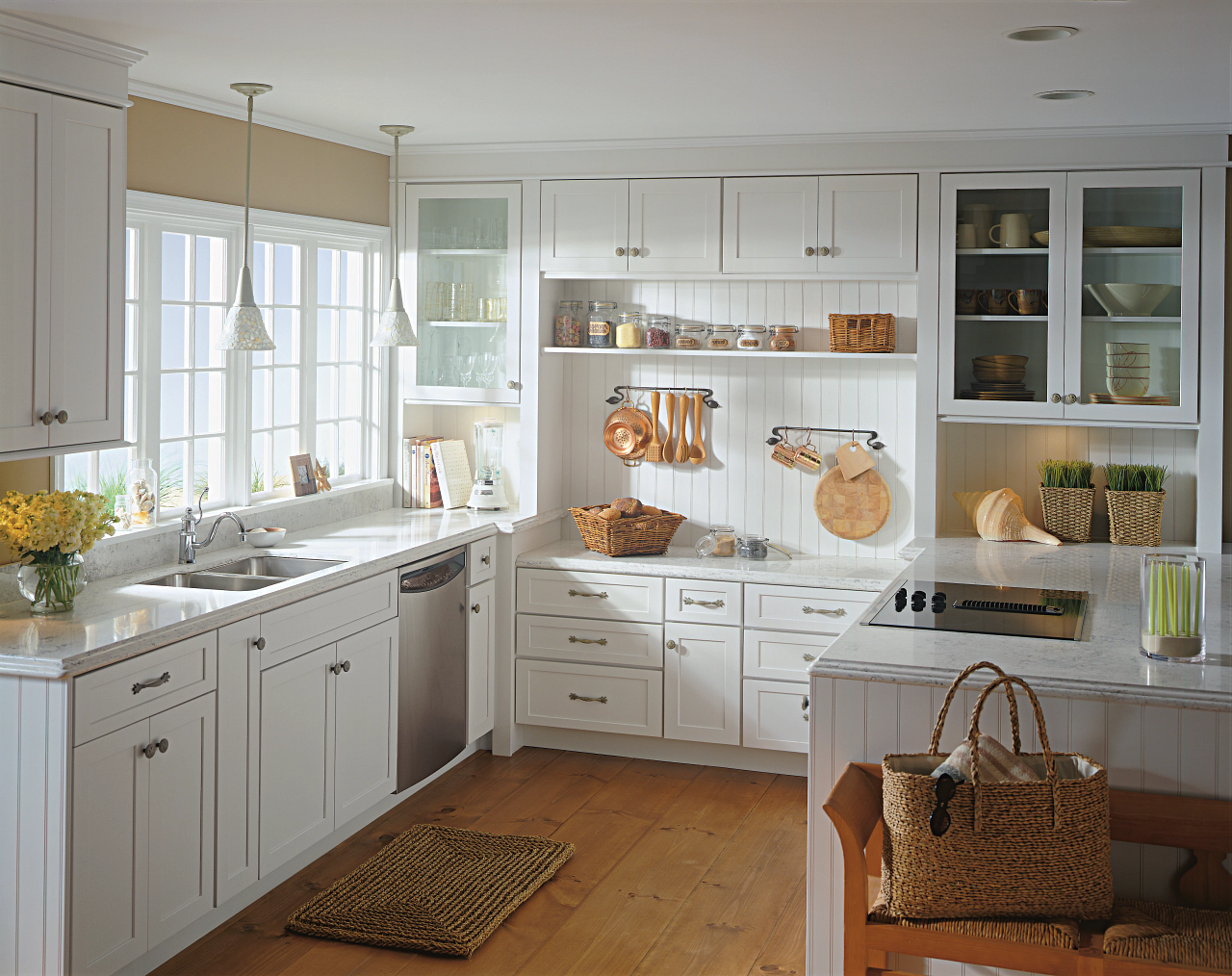
Common Wood Species for Kitchen Cabinets
There is no denying the beauty mother nature offers. So how does one choose which wood species to select for kitchen cabinetry? It's easy! Trust the knowledge and experience of your Kiba Studios designer. Our team has assembled the below summary of characteristics to help you start thinking about your new kitchen.
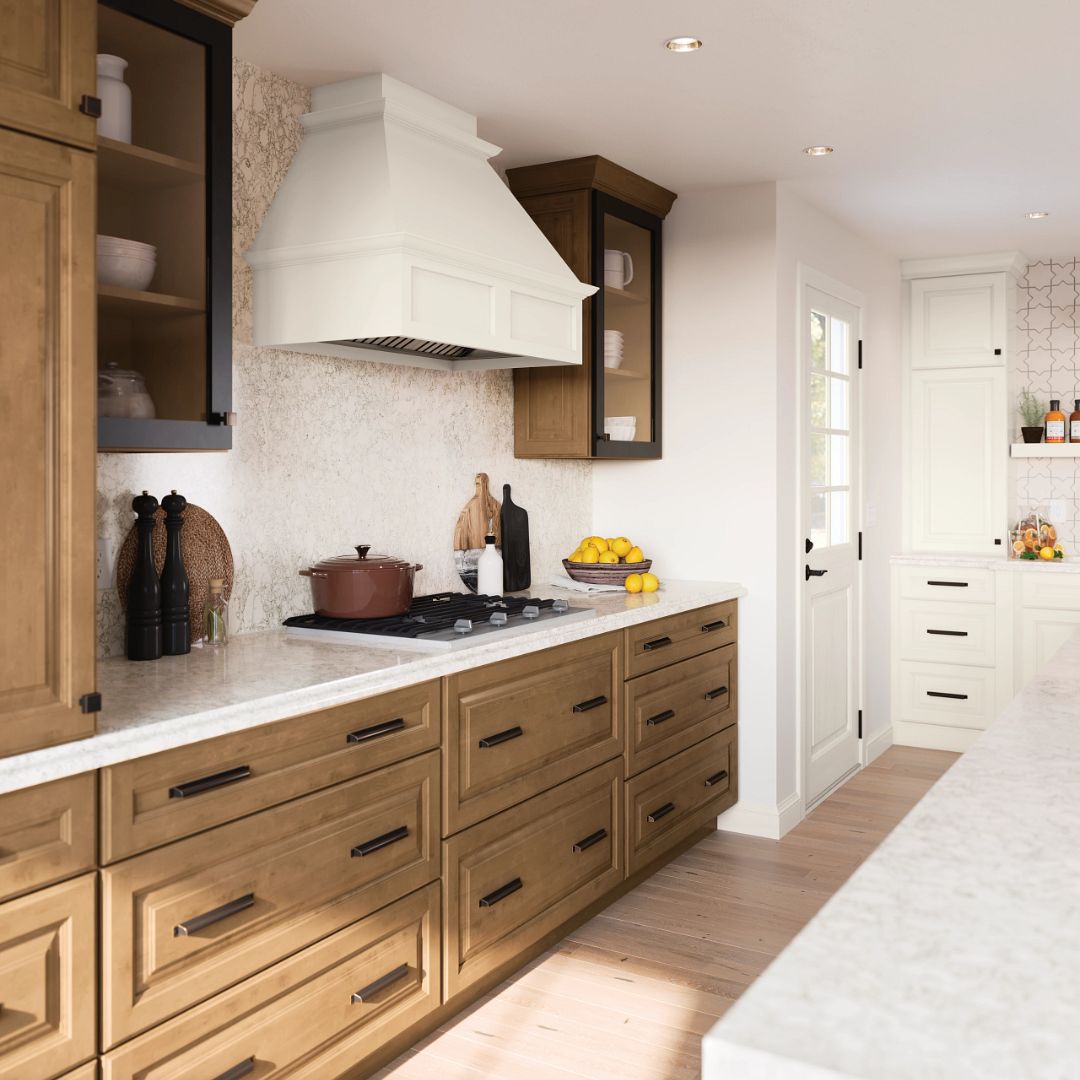
Maple
- Smooth, even and fine grain.
- Light and bright with reddish-brown hues.
- Some color variation, but generally more uniform than most hardwoods.
- Mineral streaks are common and appear darker when stained.
- A distinct mottled or blotchy look is apparent when stained.
- With opaque finishes, choose an MDF door center panel unless a distressed
- finish is specified.
- Aging: With exposure to sunlight, Maple will develop a deep honey-gold patina within the first couple of years.
Cherry
- Smooth, even grained hardwood.
- Heartwood can range from deep red to reddish-brown.
- Warm rich character, in its natural state it may have areas that are yellowish, green and even gray.
- Variations may be present in natural or light finishes.
- Sapwood, mineral streaking, fine pin holes and pitch pockets may be present.
- Aging: Cherry “mellows” as it ages. It will darken and redden significantly. It starts to age soon after exposure to sunlight.
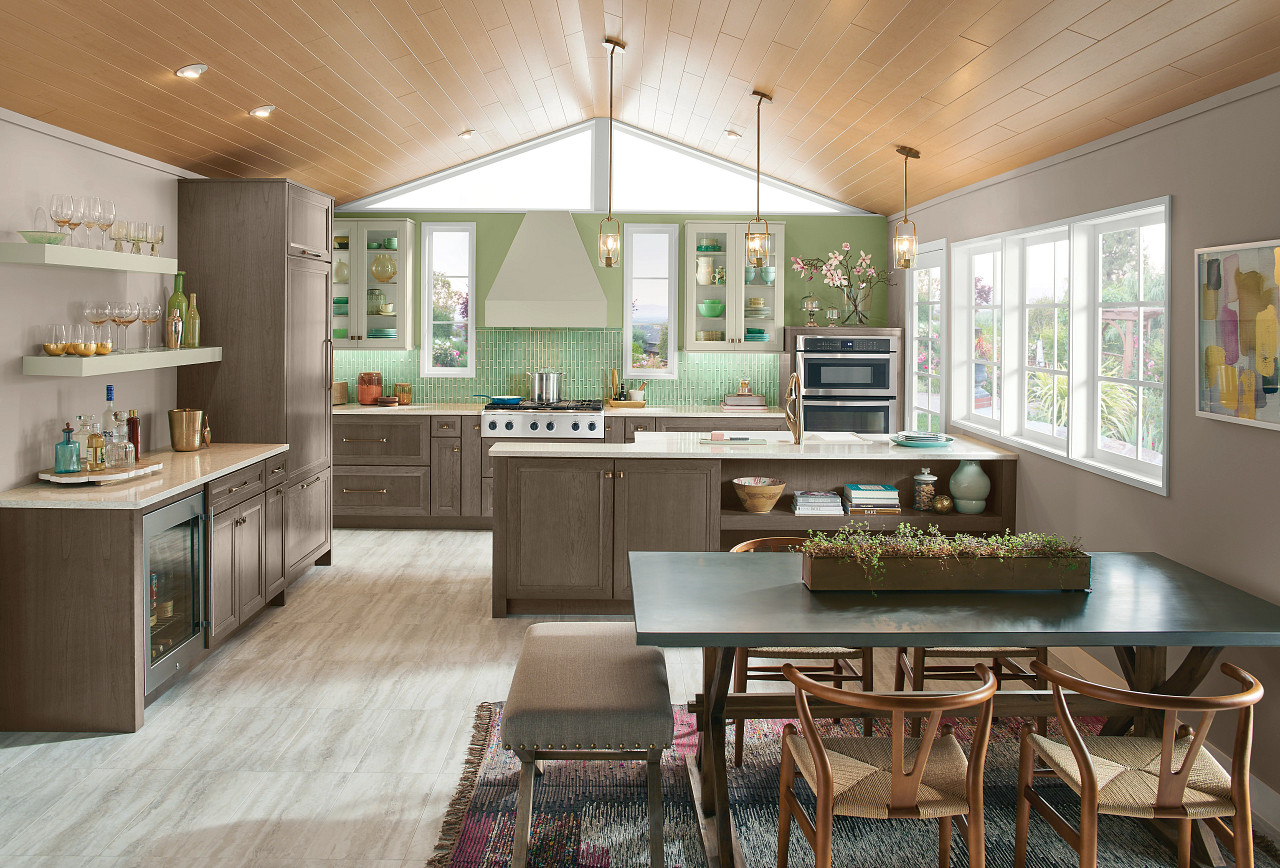
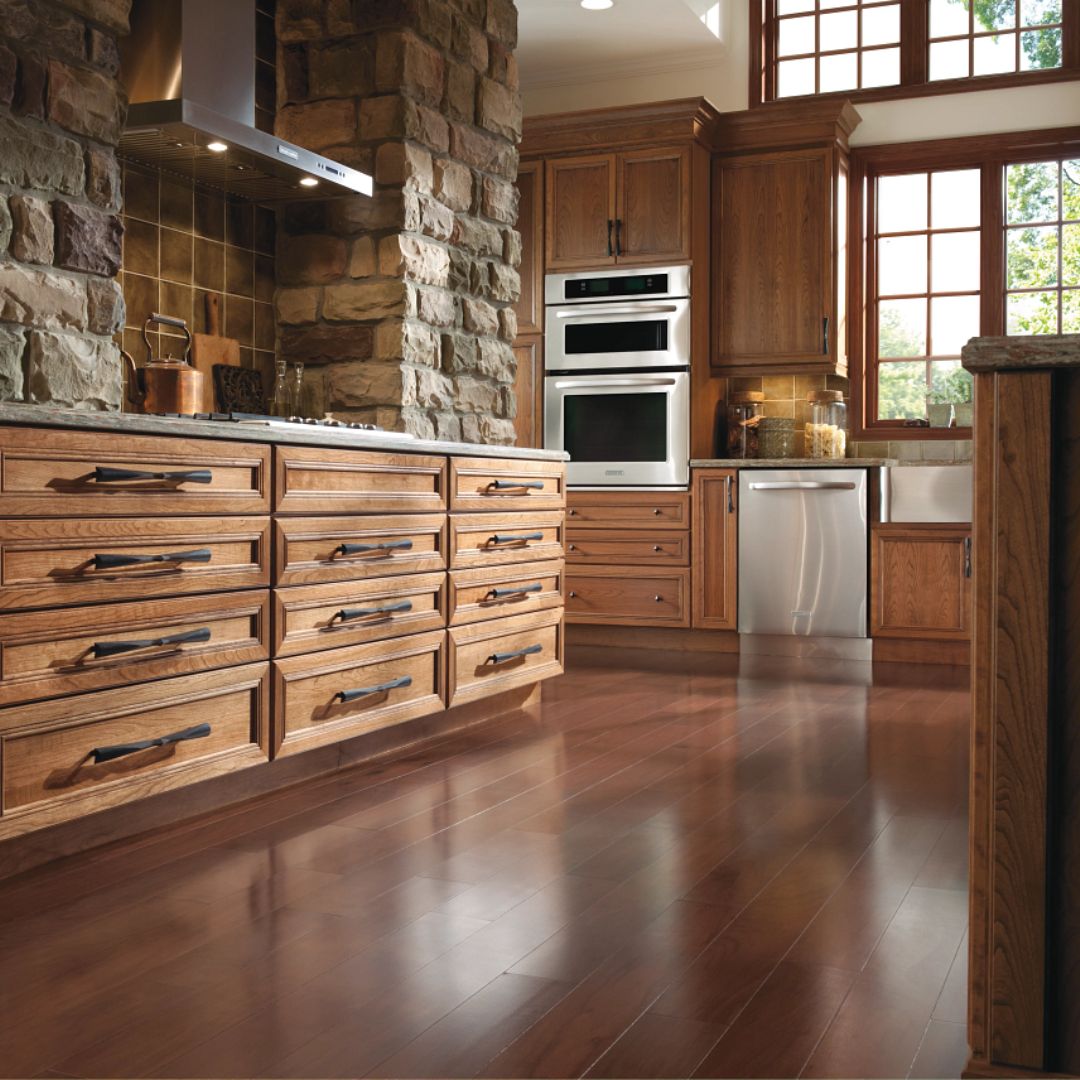
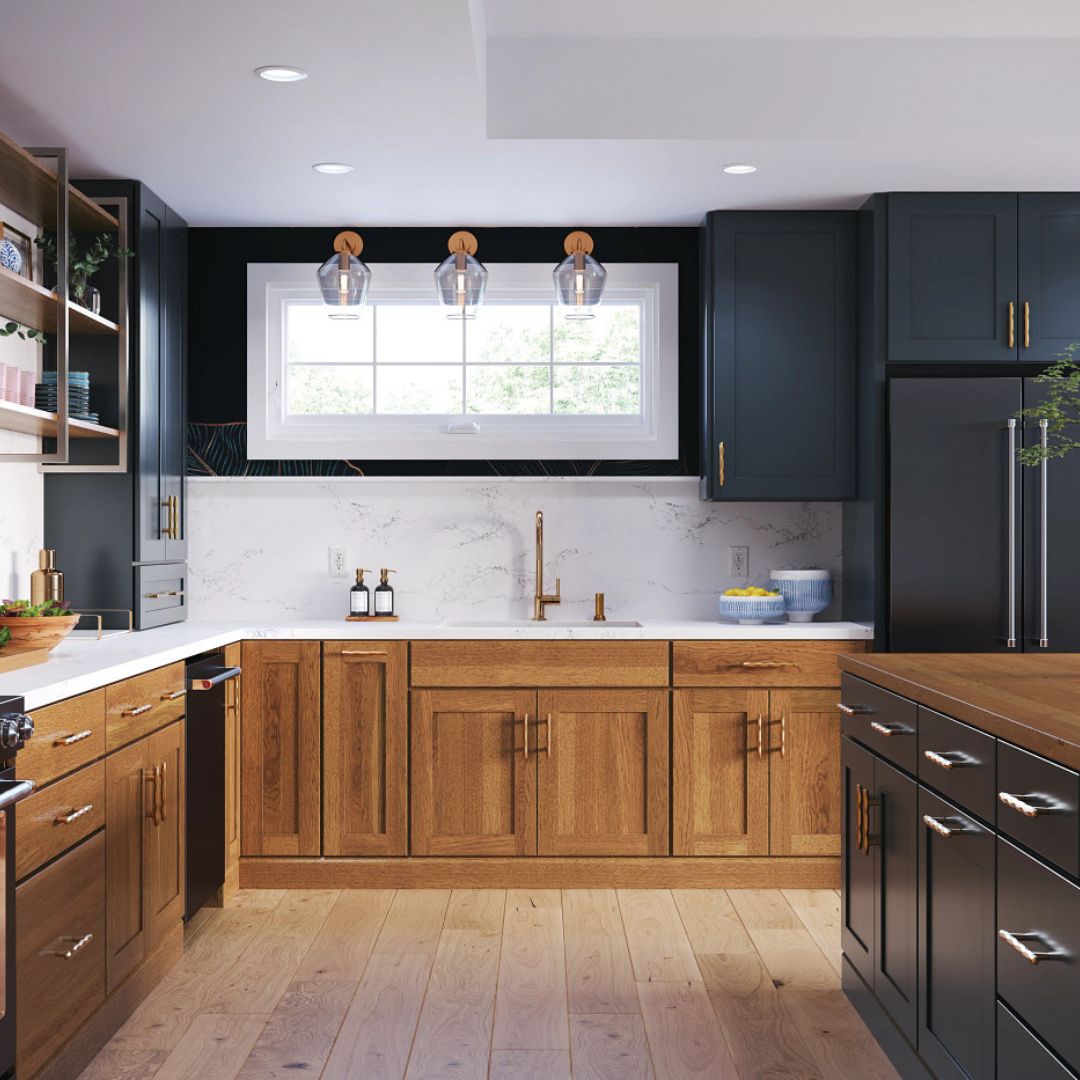
Red Oak
- Predominant grain patterns that run from straight to arched and pointed.
- Color and light and dark variations are present and noticeable in natural finishes.
- Aging: Red Oak will “Mellow” and take on a more yellow or golden tone.
Alder & Rustic Alder
- Straight even textured with a subdued grain pattern.
- Fairly uniform honey color in its natural state.
- Sapwood can be distinguished from heartwood.
- Tight pin knots are sometimes present.
- Alder is more porous than many species, it will take light
- finishes well, deep brown/black stain may appear “ticky”
- highlighting the natural porosity of the wood.
- Rustic Alder features more dramatic pin holes, knots, and grain variation.
- Aging: With exposure to sunlight, Alder will become a shade lighter, “mellowing” in color.
CAUTION: Softer than other hardwoods, it is vulnerable to scratches and dents. It can easily be dented with your fingernail.
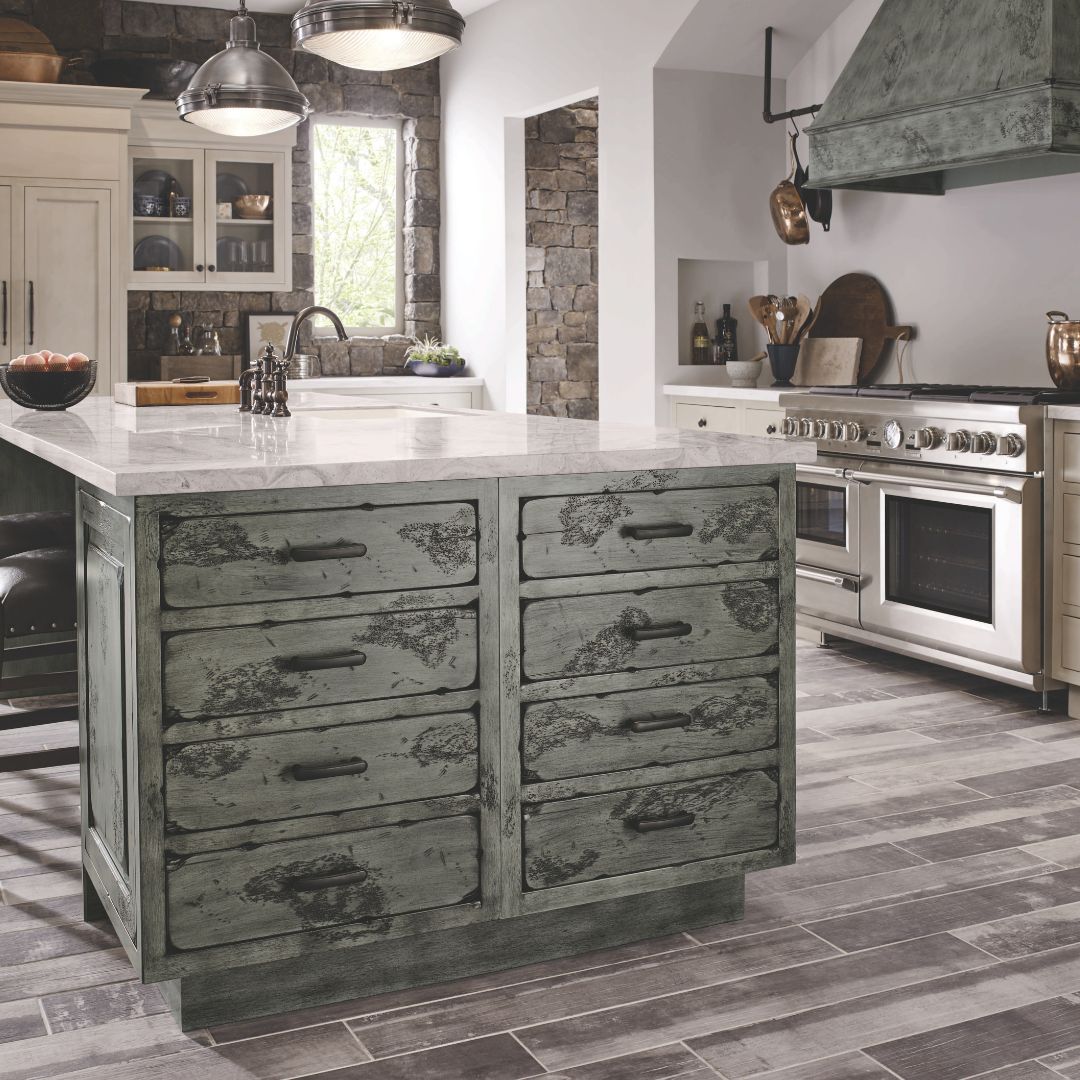
Hickory & Rustic Hickory
- Hickory is among the hardest and strongest woods native to the United States.
- Heartwood tends to be light to medium brown with a reddish hue.
- Sapwood is a paler yellowish brown.
- Boards with contrasting heartwood and sapwood create dramatic patterns.
- Grain is generally straight though is occasionally wavy.
- Aging: Hickory starts out dramatic but mellows over time, bringing the light and dark variations closer in value.
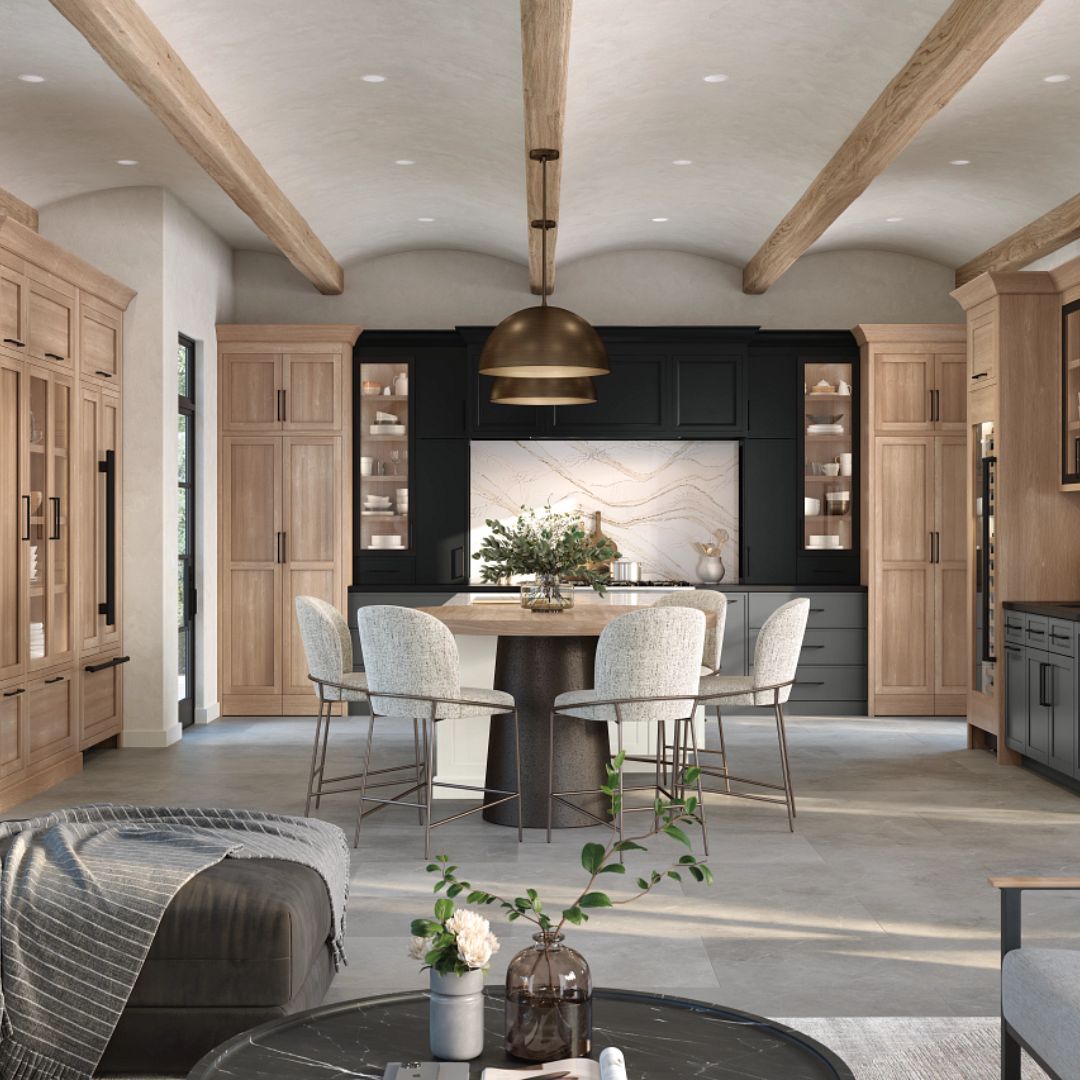
Premium Species Growing in Popularity
9% of 2025 NKBA Kitchen Trends survey respondents list white oak kitchen cabinets as the clear favorite.
Quarter Sawn White Oak
- A slow growing tree, the rings are much closer than red oak.
- Color ranges from a nearly white sapwood to a darker gray-brown heartwood.
- Takes stain evenly.
- Cut using the heart of the wood as the edge rather than the center, allowing visibility of long distinctive “rays” and “flecks”.
- White oak is the best match when selecting mouldings, turnings, etc.
- Aging: With exposure to sunlight, Quarter Sawn White Oak will become slightly yellower in color.
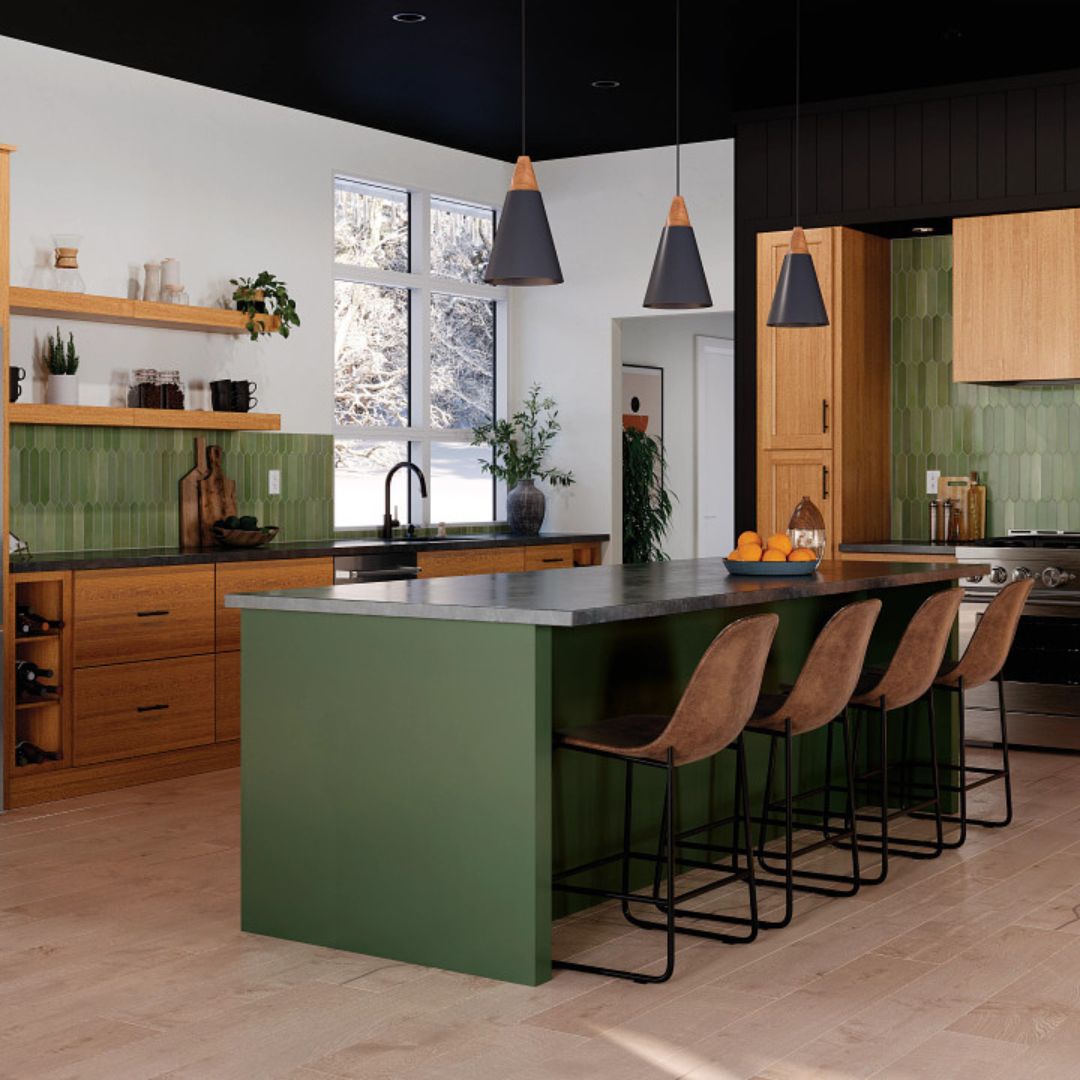
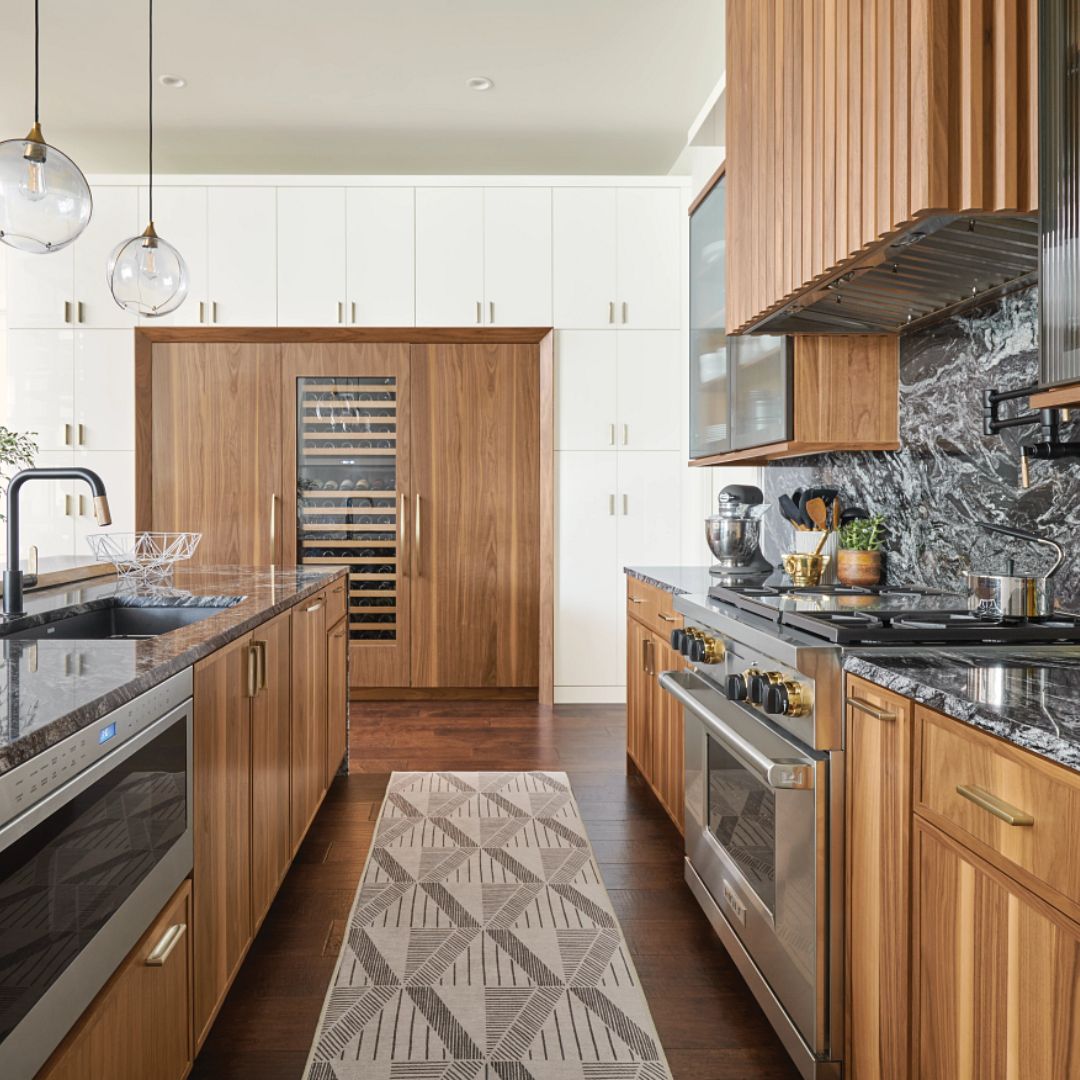
Walnut
- Black walnut has been called “King of Hardwoods”.
- Smooth grain with rich, warm appeal.
- Color ranges from deep chocolate to light reddish-gray brown.
- Sapwood will be present and range from light yellow to light brown.
- There may be vast color variation in solid walnut doors, veneer slab doors
- will be more consistent in color tone.
- Aging: Walnut will lighten in color and take on an orange/yellow cast.
Take a deeper dive into the science of selecting the right wood for your new kitchen cabinets. Click to learn more.
Don’t just redo your kitchen. Create an all-new, nature-inspired kitchen that wows! with expert know-how provided by your locally owned Kiba Studios kitchen and bath showroom. Click to consult a Kiba Studios kitchen designer now. Why wood you wait?